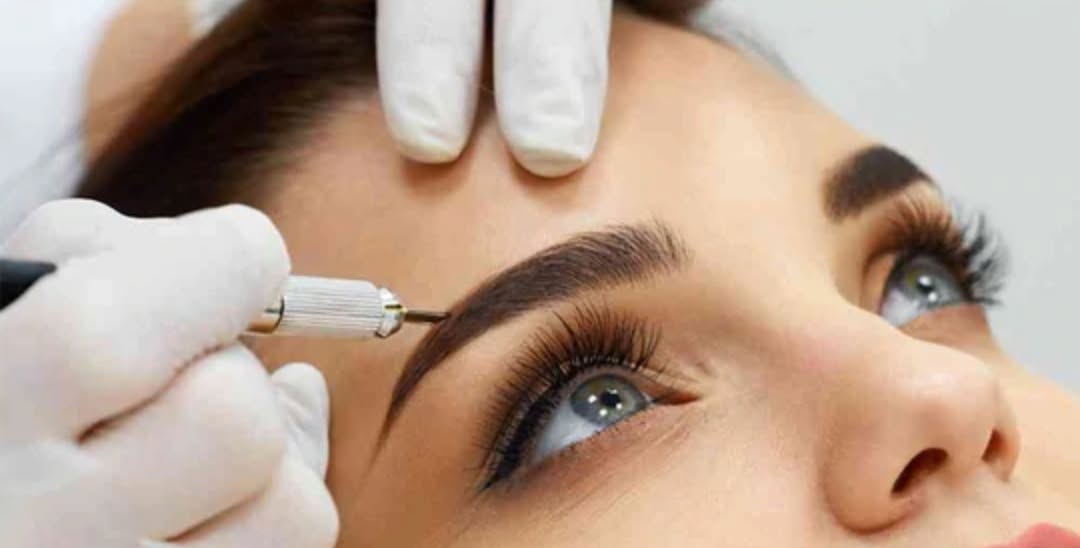
Microblading brows

Microblading brows

from 110 min

From 1,340 kr

Semi-permanent drawing of hair strokes in the brows with a hand tool that places pigment in the skin.

Not ready to book?

Choose an option

5 options

Microblading

140 min

Correction within 8 weeks

110 min

Correction after 8 weeks

110 min

Yearly refresh

110 min

Refresh after 1.5 years

110 min

Applied to Eyebrows

About the treatment

At a glance

Duration
from 110 min
Downtime
Usually 7–14 days of visible healing

Benefits

  • Natural hair strokes in the brows
  • Fuller brows without make-up
  • A shape adapted to your face

Expected results

The brows look fuller and more defined. The final result shows after four to six weeks and lasts 12–18 months.

Overview & Procedure

What the treatment is and how it's performed

What it is

Microblading is a form of permanent makeup in which the practitioner draws fine hair strokes in the brows by hand. The tool has a row of very fine needles that place pigment in the top layer of the skin. The strokes follow the direction of your own hairs, so the brows look natural and fuller. The result fades gradually over 12–18 months.

  • The first treatment sets the shape and colour.
  • A correction within eight weeks, once the skin has healed, fills in strokes that have faded.
  • A yearly refresh after 12–18 months.

  1. The practitioner goes through shape and colour with you, and draws the brows to the measurements of your face.
  2. You approve the shape before the treatment starts.
  3. Numbing cream is applied to the skin.
  4. The pigment is placed in the top layer of the skin, and the treatment ends with a thin layer of ointment.

  • Avoid sun, sunbeds and self-tan on the area for the last two weeks.
  • Stop using retinol and acids on the area one to two weeks before.
  • Avoid alcohol for the last day before, because it can cause more bleeding.
  • If you take blood-thinning medicines, check with your doctor before you book. Do not stop taking them on your own.

A new treatment takes about two hours. Corrections and refreshes take less time.

Experience & Recovery

Pain level, downtime and healing

With numbing cream, most people rate it 2–4 out of 10. It feels like light scratches.

  • Common: redness, swelling and tenderness in the first days, and scabs or flaking while the skin heals.
  • Uncommon: uneven colour or patches that need a touch-up.
  • Rare: infection, an allergic reaction to the pigment, scarring or the pigment spreading in the skin.

  • Keep the area clean and dry in the first days, and follow the clinic's written advice on cleansing and ointment.
  • Do not pick or scratch scabs.
  • Avoid make-up on the area, saunas, swimming, hard exercise and sun until the skin has healed.
  • Use a high-factor sunscreen on the area once the skin has healed. Sun fades the pigment.

Usually 7–14 days of visible healing. In the first days, the brows are darker and sharper than the final result. They then flake, and the colour can look uneven or almost gone for a while. The colour returns and settles within four to six weeks.

Expectations & Safety

Who it's for and safety information

  • Permanent makeup is a form of tattooing. The pigment fades over time, but does not disappear completely on its own.
  • Removal or correction often needs several laser treatments. Choose shape and colour with care.
  • Skin type affects the result. Oily skin often gives a softer, more blurred result.
  • Mention your permanent makeup if you are having an MRI scan. Some pigments can cause warmth or swelling during the scan.

  • Thin, light or uneven brows.
  • Anyone who wants natural brows with hair strokes without daily make-up.
  • Normal to dry skin.

  • Anyone who cannot take a few days of visible healing.
  • Wounds, eczema, spots or irritated skin in the brow area.
  • Very oily skin or large pores in the brow area. The strokes then blur, and powder brows by machine may suit better.

The result lasts 12–18 months and fades gradually. A yearly refresh keeps the strokes crisp.

  • Pregnancy and breastfeeding.
  • Infection, wounds, eczema or psoriasis in the area.
  • Tablet treatment for acne in the last six months.
  • A tendency to keloids or large, raised scars.
  • Diabetes that is not well controlled, a weakened immune system or ongoing chemotherapy.
  • A known allergy to the pigments.

Contact the clinic or a doctor if you get increasing pain, swelling, warmth, spreading redness, pus or a fever after the treatment.