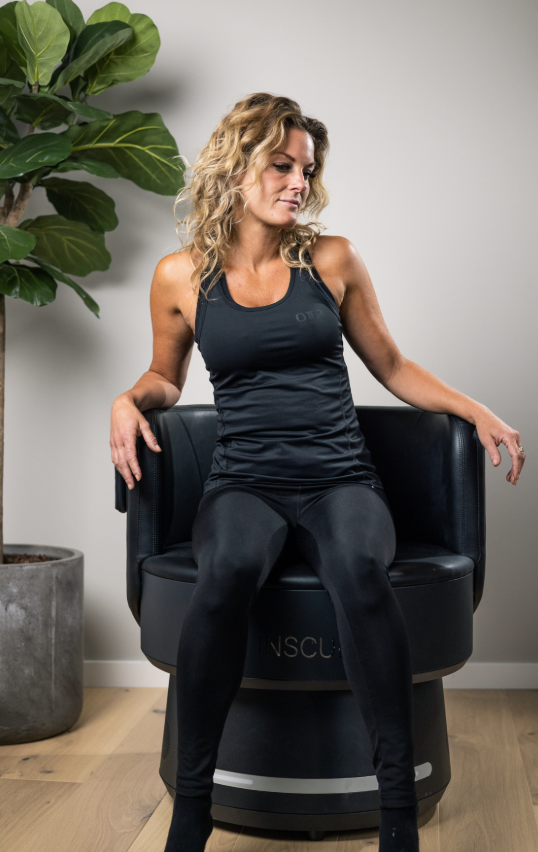
Pelvic floor training in an electromagnetic chair

Pelvic floor training in an electromagnetic chair

from 60 min

1,690 kr

A treatment in a chair with electromagnetic stimulation that trains the pelvic floor muscles.

Not ready to book?

Applied to Intimate area

About the treatment

At a glance

Duration
1 hr
Pain level
The treatment does not hurt
Downtime
No downtime

Benefits

  • Strengthens the pelvic floor
  • Fully clothed
  • No downtime
  • An addition to pelvic floor exercises

Expected results

Many people notice less urinary leakage during the course. The effect is moderate, varies and fades without training.

Overview & Procedure

What the treatment is and how it's performed

What it is

Insculpt Chair is a chair with electromagnetic stimulation that makes the pelvic floor muscles contract, thousands of times during one treatment. You sit fully clothed. The treatment is used to strengthen the pelvic floor with urinary leakage, for example after childbirth or with age. The effect is moderate and varies, and it does not replace pelvic floor exercises.

  • Ideally a trial session first.
  • Usually a course of 6–10 treatments, twice a week.
  • Maintenance as needed.

  1. The practitioner goes through your symptoms and your health.
  2. You sit down in the chair, fully clothed.
  3. The strength is increased gradually until you feel clear contractions.
  4. You can return to your day straight away afterwards.

The treatment takes about 30 minutes.

Experience & Recovery

Pain level, downtime and healing

The treatment does not hurt. You feel strong contractions and tingling in the pelvic floor.

  • Common: muscle soreness in the pelvic floor or abdomen.
  • Rare: pain in the pelvis or lower back.

  • Keep doing pelvic floor exercises at home.

No downtime.

Expectations & Safety

Who it's for and safety information

  • Pelvic floor exercises are the first choice for urinary leakage. The treatment is an addition, not a replacement.
  • The effect fades over time without training or maintenance.

  • Urinary leakage when coughing, sneezing or jumping.
  • A weak pelvic floor after childbirth.
  • Anyone who finds it hard to feel their pelvic floor muscles.

  • New or increasing urinary leakage that a doctor has not examined.
  • The first six weeks after childbirth.

Many people notice less leakage during the course. The effect lasts longest with pelvic floor exercises at home.

  • Pregnancy.
  • A pacemaker, a defibrillator or another electronic implant.
  • Metal implants in the pelvis or hips, including a copper coil.
  • A urinary tract infection or another infection in the area.
  • Recent surgery in the area.
  • Cancer, unless a doctor has cleared you.

Contact a doctor if you get blood in your urine, a burning feeling when you pass urine, a fever or pain in the pelvis.